

If you're a healthcare professional exploring psychedelic therapy training Canada, you may be wondering what qualifications you need, which programs provide meaningful clinical preparation, and how to practise safely within Canada's evolving regulatory environment.
As interest in psychedelic assisted therapy grows, so does the need for clinicians who understand not only the research, but also the therapeutic skills, ethical responsibilities, and professional boundaries involved.
The short answer: Canada has no separate national licence for psychedelic therapists. Qualified healthcare professionals can pursue specialized education, but clinical practice involving controlled substances requires appropriate professional authority and regulatory authorization.
This guide explores the legal landscape, core training competencies, and opportunities for supervised experiential learning.
What Is Psychedelic Assisted Therapy?
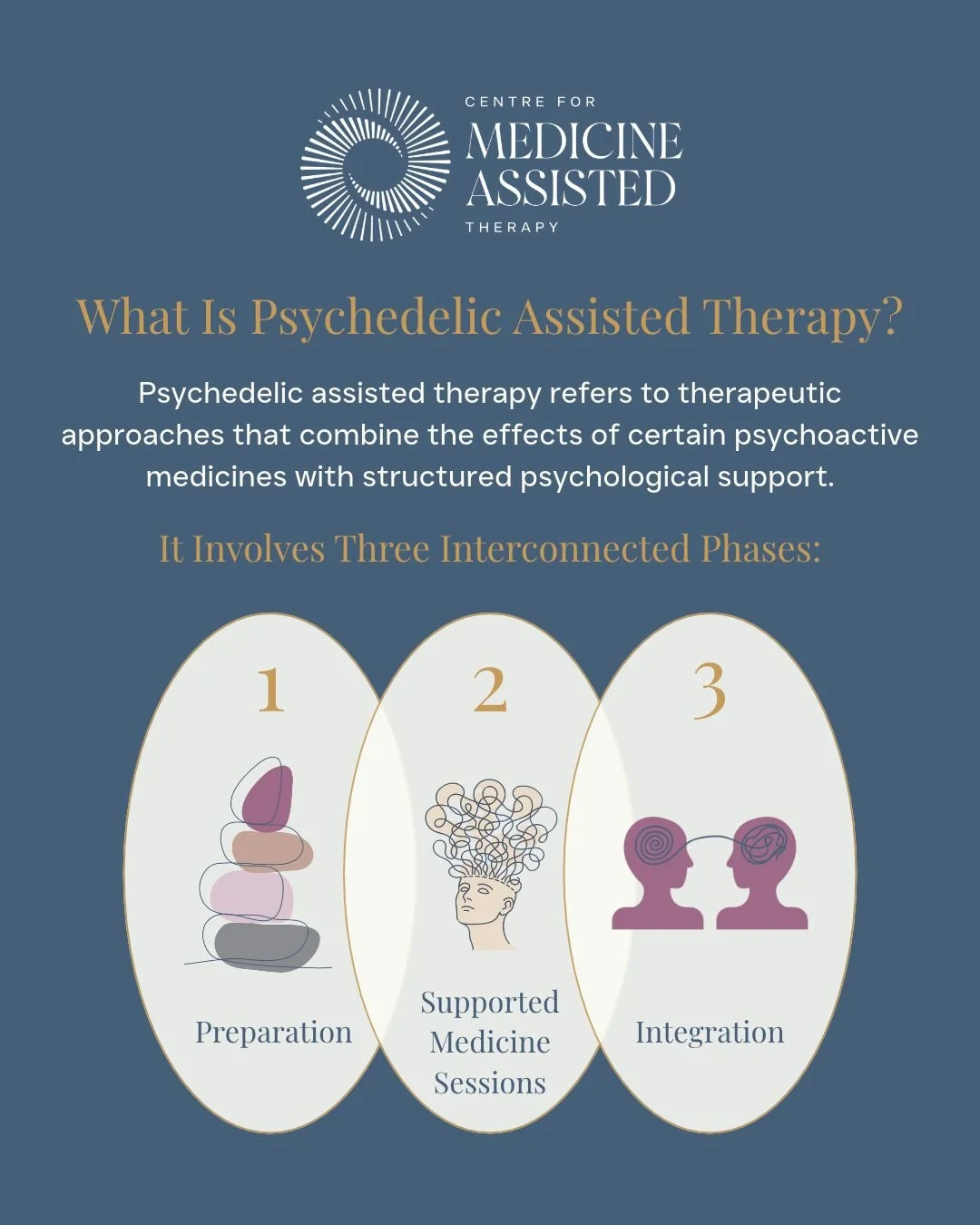
Psychedelic assisted therapy refers to therapeutic approaches that combine the effects of certain psychoactive medicines with structured psychological support.
Unlike conventional medication-only approaches, psychedelic assisted psychotherapy typically involves three interconnected phases: preparation, supported medicine sessions, and post-session integration.
Preparation establishes therapeutic trust, informed consent, safety planning, and treatment intentions. Medicine sessions may involve altered perception, emotional processing, and non-ordinary states of consciousness. Integration helps individuals make sense of their experiences and translate insights into everyday life.
Learn more: Is preparation the most important part of Medicine Assisted Therapy?
Clinical research has investigated these approaches for mental health conditions including post-traumatic stress disorder (PTSD) and treatment-resistant depression. Findings are promising in selected populations, although important questions remain about long-term outcomes, safety, and the contribution of psychotherapy itself.[1,2]
For the psychedelic therapist, the work requires more than familiarity with medicines. It demands relational presence, clinical judgment, and the capacity to support clients through potentially challenging experiences.
Is Psychedelic Therapy Legal? Canada's Legal Landscape
In Canada, the field of psychedelic therapy is evolving, with licensed providers subject to regulatory oversight. The following describes its current legal status and constraints.
What Psychedelic Medicine Is Used by Practitioners?
Psychedelic therapy in Canada operates within federal drug legislation and provincial professional regulations. Different substances have different legal pathways, and completing therapy training does not itself establish permission to administer them.
Ketamine Assisted Therapy in Clinical Practice
Ketamine is an authorized prescription medicine in Canada, primarily used as an anesthetic. It may also be prescribed off label for certain mental health conditions, including depression, when clinically appropriate.
Ketamine assisted therapy combines medically supervised ketamine administration with psychological preparation, therapeutic support, and integration and may be provided legally in certain Canadian clinics.
Approaches vary across clinical settings, and the evidence for ketamine-assisted psychotherapy as a combined intervention remains less established than the evidence for ketamine's pharmacological antidepressant effects.
Qualified practitioners must work within their professional scope, with appropriate medical oversight, clinical assessment, and safety protocols.
Psilocybin and MDMA: Canada’s Special Access Program and Clinical Trials
Psilocybin and MDMA remain restricted drugs in Canada and are not authorized for routine marketing as psychiatric treatments despite ongoing studies exploring their potential therapeutic use.
However, Health Canada's Special Access Program (SAP) permits eligible prescribing practitioners to request access to otherwise unauthorized medicines for patients with serious or life-threatening conditions when conventional treatments have failed, are unsuitable, or are unavailable.
Access is assessed individually and is not guaranteed. Authorized clinical trials provide another important pathway for investigating these treatments.
Research into psilocybin for treatment-resistant depression and MDMA-assisted therapy for PTSD has contributed to growing interest in psychedelic medicine, while also highlighting the need for careful patient selection, ongoing safety evaluation, and rigorous training.[1–4]
Integration Therapy and Harm Reduction
Psychedelic integration is a form of psychological support that helps individuals process psychedelic experiences, whether these occurred in authorized treatment settings or elsewhere.
When provided within a practitioner's lawful scope, integration psychotherapy does not require the practitioner to administer a psychedelic substance.
A harm reduction approach emphasizes nonjudgmental care, education, psychological safety, and recognition of potential risks.
Mental health professionals can help reduce harm by supporting emotional regulation, identifying concerning symptoms, and assisting clients without encouraging unauthorized substance use.
How to Become a Psychedelic Therapist in Canada
Although there is no single path to practicing psychedelic therapy in Canada, there are several key steps clinicians follow when pursuing this career, which we cover below.
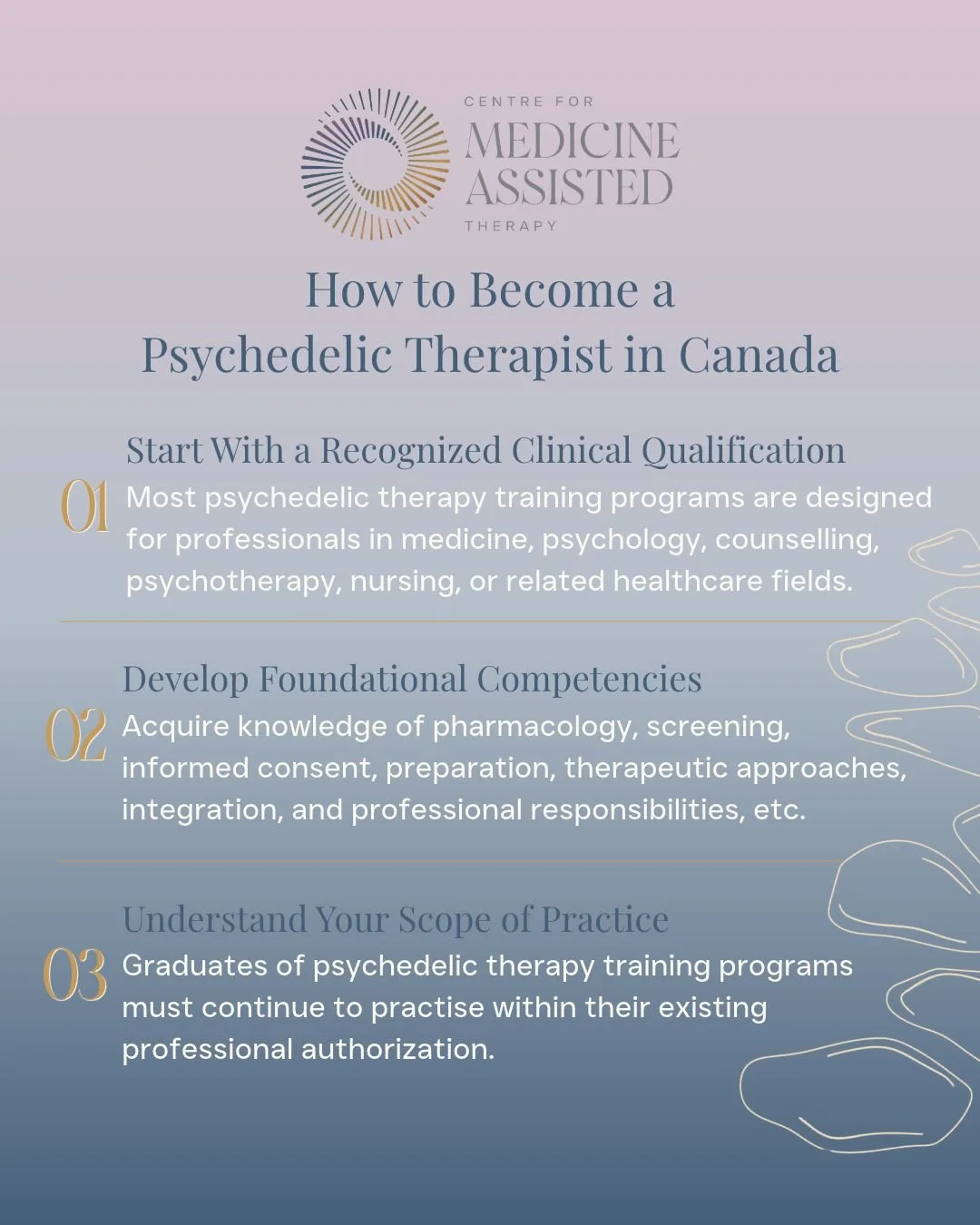
Start With a Recognized Clinical Qualification
It’s important to clarify that there is no nationally regulated designation of "psychedelic therapist" in Canada.
Most advanced psychedelic therapy training programs are designed for professionals with established backgrounds in medicine, psychology, counselling, psychotherapy, nursing, or related healthcare disciplines.
Eligibility requirements vary. Many programs expect graduate-level education, professional registration where applicable, and prior clinical experience.
Develop Foundational Competencies
Psychedelic assisted therapy training Canada programs generally introduce the scientific, psychological, and ethical foundations of this emerging field.
Foundational therapy training may cover the history of psychedelic research, pharmacology, screening, informed consent, preparation, therapeutic approaches, integration, and professional responsibilities.
Programs such as Therapsil training, University of Ottawa Masters of Arts Psychedelics and Consciousness Studies, and other educational pathways have contributed to professional learning opportunities in Canada, although curricula, experiential components, and eligibility requirements differ.
Understand Your Scope of Practice
Graduates of psychedelic therapy training programs must continue to practise within their existing professional authorization.
A training certificate does not create a new clinical licence, expand prescribing privileges, or permit possession or administration of restricted substances.
What Psychedelic Assisted Therapy Training Programs Cover
While individual training programs vary in scope, the following key areas of focus tend to overlap across programs.
Pharmacology, Neurobiology, and Professional Practice Ethical Frameworks
Effective psychedelic therapy training includes an understanding of drug effects, contraindications, potential adverse reactions, and the current limitations of clinical research.
Equally important are ethical frameworks addressing informed consent, confidentiality, power dynamics, therapeutic touch, professional boundaries, and conflicts of interest.
Phelps' foundational work on psychedelic therapist competencies emphasizes empathetic presence, trust, therapist self-awareness, ethical integrity, and knowledge of altered states.[5]
Trauma-Informed Care and Cultural Safety
Psychedelic experiences can involve heightened emotional vulnerability, altered perceptions, and increased sensitivity to interpersonal dynamics.
Trauma informed care therefore requires careful attention to autonomy, choice, collaboration, and psychological safety.
Training should also address cultural humility, cultural safety, and respect for Indigenous knowledge and traditions without appropriating practices or claiming authority outside one's training.
Clinical Experience With Non-Ordinary States
Didactic education provides essential knowledge, but experiential learning offers a different dimension of preparation.
Through supervised practice, role-play, observation, and carefully structured experiential exercises, trainees can explore how they respond to uncertainty, emotional intensity, silence, and shifting therapeutic relationships.
Experiential learning may include legally authorized medicine sessions where permitted, but personal psychedelic experiences are not universally required or established as necessary for professional competence.
What Training Does Not Authorize
Even comprehensive psychedelic assisted therapy training does not authorize graduates to independently offer psychedelic assisted therapy involving restricted drugs.
Any clinical activity must comply with applicable federal and provincial requirements, professional scope, and institutional policies.
Moving Beyond Foundational Training With CMAT's Advanced Experiential ISPAT Apprenticeship
Depending on the foundational psychedelic therapy training program someone has completed, they may want to advance their education through more hands-on experiential learning; the ISPAT apprenticeship offers that opportunity.
Who Is the ISPAT Apprenticeship For?
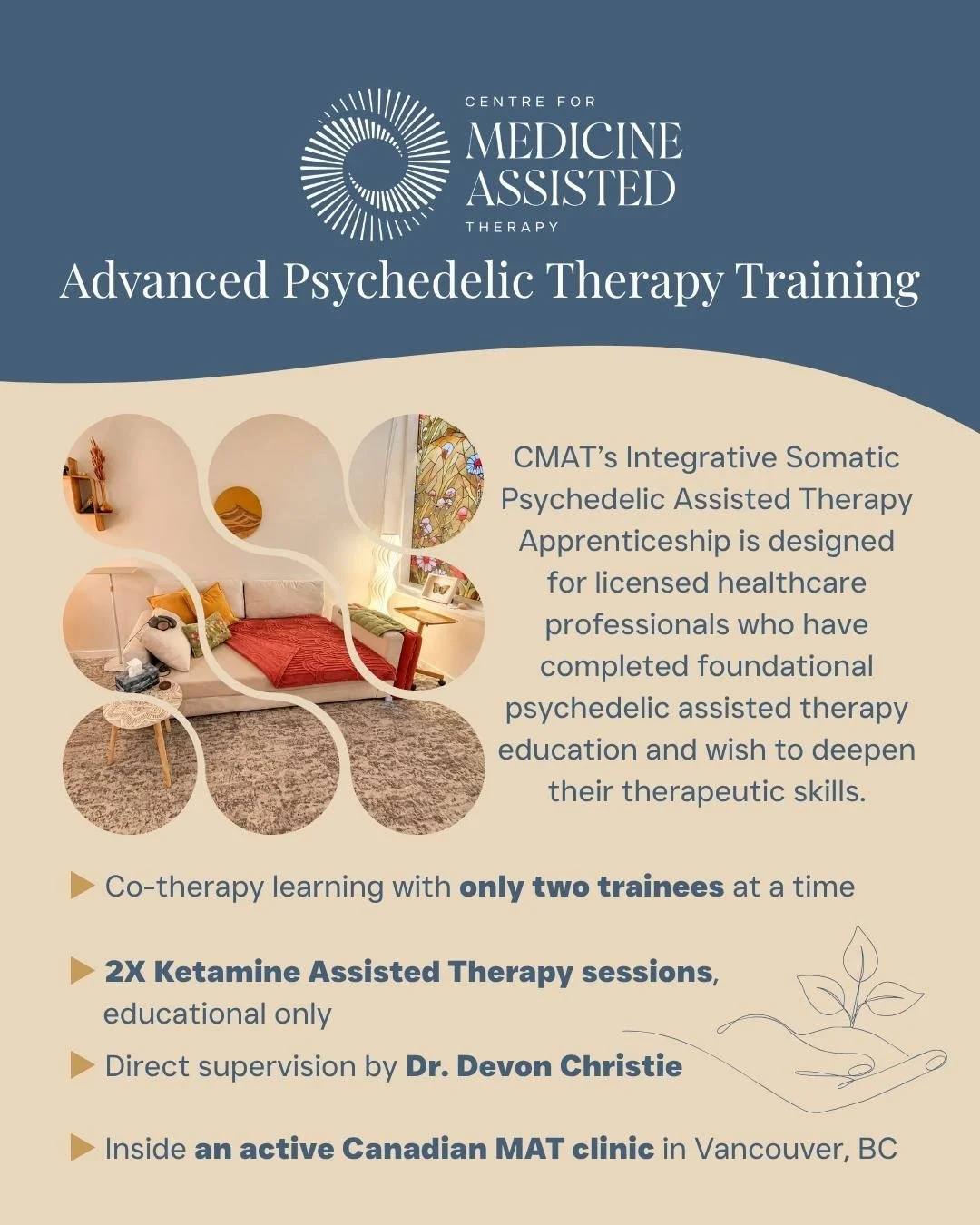
At Vancouver's Centre for Medicine Assisted Therapy (CMAT), the Integrative Somatic Psychedelic Assisted Therapy (ISPAT) Apprenticeship is designed for licensed healthcare professionals who have completed foundational psychedelic assisted therapy education and wish to deepen their therapeutic skills.
The program is facilitated by Dr. Devon Christie and builds on established clinical competencies rather than replacing foundational training.
What You'll Learn: Integrative Somatic Psychedelic Assisted Therapy
ISPAT integrates trauma-informed, somatic, relational, mindfulness-based, and parts-informed approaches to working with non-ordinary states of consciousness.
The curriculum emphasizes therapeutic presence, nervous system awareness, embodied processing, consent, and responsive support during emotionally complex experiences.
These skills have practical applications in psychotherapy, psychedelic integration, and other clinical contexts within a practitioner's authorized scope.
Our Co-Therapy Experiential Learning Model
ISPAT uses a six-week hybrid apprenticeship model combining structured education, supervised experiential learning, and reflective practice.
Participants work in therapeutic dyads, alternating between therapist and participant roles during supervised ketamine assisted therapy learning sessions, subject to individual medical eligibility and informed consent.
This approach provides opportunities to explore both the responsibilities of the trained therapists and the vulnerability inherent in receiving therapeutic support.
The objective is to strengthen clinical self-awareness, relational capacity, and ethical practice—not to confer independent authorization to administer medicines.
Is ISPAT the Right Fit?
ISPAT may be appropriate for clinicians seeking advanced therapy training after completing a recognized foundational certificate.
It is particularly relevant for mental health professionals interested in somatic psychotherapy, trauma-informed approaches, and experiential professional development.
Applicants should consider their existing qualifications, clinical goals, readiness for experiential learning, and regulatory responsibilities.
What ISPAT Graduates Say About the Apprenticeship
Graduates are licensed professionals who have completed the apprenticeship at CMAT. Their feedback concerns their educational experience and professional development, not patient mental health treatment outcomes.
“There was something really special about this program where it was really intimate and allowed for the other therapist and myself to connect together, and with Dr. Christie holding the space, it created a lot of safety and allowed for a much deeper dive than I imagined” – Heather, Certified Coach
“Getting to see Dr. Christie work, and kind of tag team and get that facilitation experience with her supervision and her input was extremely enriching, and definitely solidified a lot of the theory knowledge I was introduced to in [my previous] training” – Tahni, Clinical Mental Health Counselling Graduate
Rather than relying on client testimonials or claims of clinical effectiveness, CMAT encourages prospective applicants to review the curriculum, faculty qualifications, learning objectives, and experiential requirements when evaluating the program.
Building Competence in an Emerging Field
As psychedelic research advances, the need for thoughtful, accountable, and appropriately trained clinicians will continue to evolve.
For professionals pursuing psychedelic-assisted therapy training Canada opportunities, the most important considerations are the quality of education, attention to ethics, supervised learning, and alignment with Canadian law and professional standards.
At CMAT, we believe responsible education begins with scientific curiosity, humility, and respect for the complexity of human healing.
Learn more about CMAT's ISPAT Apprenticeship, including eligibility, curriculum, and upcoming training cohorts.
References
Mitchell, J. M., et al. (2023). MDMA-assisted therapy for moderate to severe PTSD: A randomized, placebo-controlled phase 3 trial. Nature Medicine, 29, 2473–2480. https://doi.org/10.1038/s41591-023-02565-4
Goodwin, G. M., et al. (2022). Single-dose psilocybin for a treatment-resistant episode of major depression. New England Journal of Medicine, 387, 1637–1648. https://doi.org/10.1056/NEJMoa2206443
Health Canada. Notice to stakeholders: Requests to the Special Access Program involving psychedelic-assisted psychotherapy. https://www.canada.ca/en/health-canada/services/drugs-health-products/drug-products/announcements/requests-special-access-program-psychedelic-assisted-psychotherapy.html
Health Canada. Special Access Program for drugs: Guidance document for industry and practitioners. https://www.canada.ca/en/health-canada/services/drugs-health-products/special-access/drugs/guidance.html
Phelps, J. (2017). Developing guidelines and competencies for the training of psychedelic therapists. Journal of Humanistic Psychology, 57(5), 450–487. https://doi.org/10.1177/0022167817711304
Government of Canada. Controlled Substances Regulations, SOR/2025-242. https://laws.justice.gc.ca/eng/regulations/SOR-2025-242/FullText.html
College of Physicians and Surgeons of British Columbia. (2026). Advertising and Communication with the Public, Practice Standard, Version 8.0. https://www.cpsbc.ca/files/pdf/CPSBC-PS-Advertising-Communication.pdf
Educational information only. This article does not constitute medical advice or authorization to practise outside an individual's professional scope. Regulatory requirements and access pathways may change.
